Emergency water extraction
Standing water pumped out and structural drying started on the same visit. Equipment stays until moisture readings come back to normal — not until the floor looks dry, which is a different thing.
24/7 emergency response
Burst pipes, ceiling leaks and flooded basements. One call connects you with licensed restoration pros working across Lynnwood and south Snohomish County — any hour, any day.
Call (425) 380-0446Answered live · No obligation
Answered 24/7
nights, weekends, holidays
Licensed and insured pros
vetted local restoration contractors
Lynnwood and nearby
Edmonds, Mountlake Terrace, Mill Creek, Everett
No obligation
you decide what happens next
Before help arrives
Water damage compounds by the hour. These are the things worth doing first.
In most Lynnwood homes it is in the garage, a utility area, or where the supply line enters the house. If the leak is above a ceiling, shutting off water to that floor is enough.
If water is anywhere near electrical, leave the area and call from outside.
Rugs, electronics, boxes. Furniture legs onto blocks or foil.
Insurers ask for this, and it is far easier now than later.
What gets removed and what can be dried is a decision worth making with moisture readings rather than guesswork.
Most policies require you to prevent further damage. Drying needs to start immediately.
Restoration services
Standing water pumped out and structural drying started on the same visit. Equipment stays until moisture readings come back to normal — not until the floor looks dry, which is a different thing.
A stain that appeared overnight, a soft spot, or an active drip. The leak is almost always somewhere else — a floor above, or the roof. Finding the source comes before repairing the surface.
Water coming through a wall with no obvious shut-off. Lynnwood does not get long freezes, which is exactly why the pipes that fail here are the ones nobody insulated.
Pump-out, extraction and moisture control. Crawl spaces are usually found late — months after the fact, often because of a smell rather than a sight.
Category 3 water. It is a health hazard rather than a mess, and it is not a job to attempt yourself. Containment, removal of porous materials, sanitising, drying.
Mould follows water that was never properly dried. In this climate it can establish within a couple of days. Containment, removal, and fixing whatever moisture source started it.
Fire damage almost always includes water damage from suppression. Smoke, soot and water are handled together, and the water usually comes first.
Lynnwood / Scriber Creek
Lynnwood sits in the Scriber Creek drainage basin. Rain that lands here does not soak away — it sheet-flows across the ground into roadside ditches, catch basins and culverts, and is carried to the creek, sometimes from most of a mile away. That system works until one link in it is blocked, undersized, or simply given more water than it was built for.
The city has been working this problem for two decades. Lynnwood's own engineering documents describe repeated and significant flooding over the past 20 years in the Scriber Creek corridor between 188th Street SW and 196th Street SW, affecting private residences. The city has a flood wall project at the 188th Street culvert crossing, a road-raising project on Old 196th Street SW, a basin-wide flood reduction study, and a detention facility built north of the creek to hold water back.
That is useful to know if you live near the corridor, because it tells you the water arriving at your house may have nothing to do with your plumbing.
Where it shows up inside a house: at the base of a wall rather than through a pipe. In a garage or a daylight basement during a storm. In a crawl space that never quite dries between one wet spell and the next, from October through March.
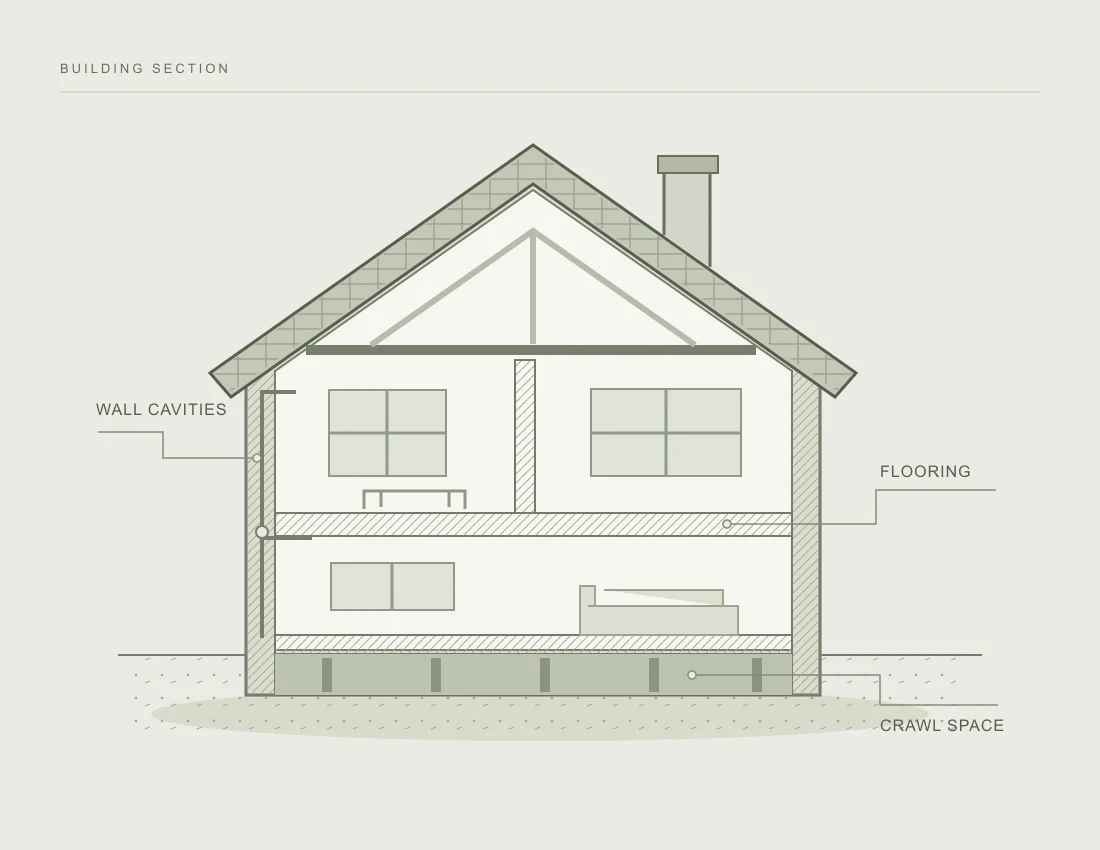
Inside the house
Lynnwood incorporated in 1959, and most of it was built in the decades after. Alderwood Manor came into the city in 1984, with the last parcels in Maple Park following in 1988. A good deal of the housing east of the city centre dates from the 1940s through the 1960s, and much of the rest from the 1970s through the 1990s.
That matters for two reasons. Supply lines and drain runs in a house of that age are often original or on their first replacement, and they fail at fittings and joints rather than in the middle of a run. And drainage around those houses was installed to the standards of the day, which assumed less hard surface upstream than exists now.
Residential — single family, townhomes, condos and rentals. Documentation provided for the insurance claim.
Commercial — retail, office, restaurants and multi-family. The priority is getting the space operational: after-hours scheduling, containment so unaffected areas stay open, and documentation for the insurer and the property manager.
A few things to know
Call for help first. Mitigation is time-sensitive and most policies require you to prevent further damage, so waiting for authorisation before drying starts can work against a claim rather than for it. Photograph everything, then notify your insurer once cleanup is under way.
Put a container under it and move anything valuable clear. Do not push on a sagging area — a bulge means water is pooling above and it can come down at once. Turn off water to the floor above if you can reach the shut-off. Then call, because the cavity needs drying whether or not the ceiling is replaced.
It depends on how much water, how long it sat, and what it soaked into. Clean water caught within hours costs a fraction of water that sat for days or came from a sewer line. Most homeowner policies cover sudden and accidental water damage.
Typically three to five days of active drying for a contained incident, longer where water reached wall cavities, insulation or subfloors. Equipment stays until moisture meters read normal. Repairs follow, and depend on scope.
That is a drainage problem rather than a plumbing one, and it is common in a basin like this. Drying handles the immediate damage, but the recurrence is a question of where the water is arriving from — and it will keep arriving each wet season until that is addressed.
A musty smell with no visible source. Paint or wallpaper bubbling. A floor that flexes underfoot. Baseboards pulling away from the wall. A water bill that jumped without explanation. Cold, damp air coming up from a crawl space.
Yes. Moisture meters and thermal imaging find water inside walls, under slabs and beneath flooring without opening anything up. It is one of the most common calls — the damage is visible, the source is not.
No. You choose who does the work. Insurers keep preferred vendor lists, but you are not obliged to use one, and using an independent contractor does not normally mean paying out of pocket.
Lynnwood and 98036, 98037, plus Edmonds · Mountlake Terrace · Mill Creek · Mukilteo · Shoreline · Everett and the wider south Snohomish County area.
Every hour matters. Drywall wicks water upward, subfloors swell, and mould can start inside two days in this climate. There is no obligation.
Answered 24/7 · Lynnwood and south Snohomish County